

Local Independent Breweries Tackle Rising Distribution Costs with Shared Logistics
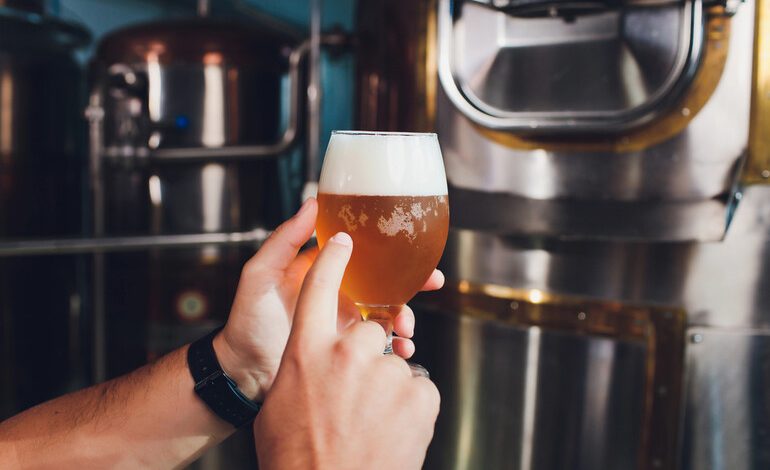
Craft beer in San Diego, long regarded as the capital of Craft, is entering a phase of structural change. The industry has been functioning on a paradigm of cutthroat independence and growth for decades. But with the changing of the calendar to 2026, the economic environment has compelled a shift from individual competition to group action. In the larger beer ecosystem, this change is particularly becoming apparent in taprooms and small breweries, as well as in distribution channels, where collaboration is increasingly contributing to growth. Shared brewing areas, collaborative seasonal releases, and planned events are assisting breweries to adapt and retain their unique identity. This changing practice is an indication of a more interconnected era in the beer industry in which long-term stability is influenced more by collaboration and community-based strategies.
Since the cost of raw materials has gone up sharply in the past (as in the case of aluminum, carbon dioxide, and specialty malts), and freight and fuel surcharges have risen by 15 percent annually, some of the mid-sized breweries of San Diego are reshaping the rulebook. These brewers are consolidating resources in order to develop a common logistics network to guard their profit margins and maintain the price of the pints at local drinker levels. Through truckload consolidation and the coordination of out-of-state freight, independent operations are discovering that they can bypass the old-fashioned roadblocks that tend to choke growth in smaller operations.
The Cost of Cold Chain and Distance
Quality is a must in the craft world. To taste as it would in Phoenix or Denver, the San Diego IPA has to be refrigerated until it reaches the glass. Logistics become the most costly aspect of the overhead of a brewery, other than labor. Conventional third-party logistics (3PL) companies tend to impose a premium price when there are Less Than Truckload (LTL) shipments. The price per pallet will be astronomical to a brewery that can only dispatch five or six pallets to a distributor in a different state. Before the beer gets to the shelf, the price point may be at a point where the average consumer is no longer willing to pay it.
One of the local operations managers says that they saw the writing on the wall in late 2024. Shipping cost was consuming our lunch; we knew that unless we could find a way to ship beer more effectively, we would have to exit three large markets in order to remain in the red. It was a team effort that led to the solution. They no longer have three half-empty trucks out in the same area that are dispatched by three different breweries; instead, they coordinate through a central hub. This enables them to load one 53-foot trailer to capacity, which saves a large amount of carbon footprint and the unit cost.
Navigating the 2026 Economic Climate
The shift toward shared logistics is not just a local anomaly; it is a response to broader economic pressures affecting the entire beverage industry. According to the Brewers Association 2025 Year in Beer report, independent craft volume declined 5% midyear as breweries faced a “new, challenging open water,” defined by rising costs due to inflation and tariffs. The mid-sized labels can hardly rely on the lone wolf method of distribution, which is now almost impossible due to this squeeze. Local brewers need to be as logistically efficient as much larger companies to ensure that they can remain on the shelves of grocery stores, competing with multinational conglomerates.
The movement in San Diego emphasizes cold chain shipping as the gold standard for these collaborative efforts. By hiring such providers as Brew Movers, which focuses on the special needs of craft beverages, these breweries can be sure that their shared loads are treated in the same way as an individual state fleet. This specialization in transport guarantees that, despite the mixing of pallets in brands, the temperature does not fluctuate, and the product is in its best condition.
Bypassing Conventional Roadblocks
The old three-tier distribution system of alcohol producers, wholesalers, and retailers tends to be discriminatory against small breweries. Massive portfolio wholesalers may not be interested in a brand that has a few hundred cases per month. With shared logistics, San Diego breweries are becoming more and more agile in the entry mode of their products to new territories by having control over the middle mile. When several breweries enter a new market in a single block of logistic weight, they have greater weight. This power of collective bargaining is spread to fuel contracts and warehouse space.
This sort of coordination is frequently used in the beer industry to determine the efficiency with which fresh stock is distributed through distributors and retail shelves to provide a uniform quality and timing in various locations. Research from the National Beer Wholesalers Association (NBWA) indicates that transportation and warehousing are increasingly a share of the total cost of goods sold. For independent producers, these expenses are often what separates a profitable quarter from a loss. Sharing the load, the independent brewers of San Diego are in effect insourcing their logistics, which is a leaner model that does not lose the independence of their large-box distributors.
The Consumer Impact
As the logistical manoeuvre may be conducted behind the scenes, the final product is seen at the checkout desk. The calculation is easy; at 2.00 cheaper to deliver a case of beer, the money can either be passed on to consumers or invested in quality ingredients. Price sensitivity is a significant consideration in a market where a four-pack of 16-ounce cans can often be over $20. The collaborative model enables the San Diego breweries to maintain their prices at par with the regional giants.
It also allows them to test with smaller, more frequent shipments of small-release beers, as well as guarantee the availability of the freshest possible product to out-of-state fans. The trend is also an indicator of a culture change in the San Diego beer fraternity. The early philosophy of the craft movement, the philosophy of rising tide lifts all boats, has come back, with a practical, business-oriented twist. There is still the tap list competition, but on the loading dock, it is a matter of cooperation.
A Blueprint for Survival in a Crowded Market
The San Diego experiment is already attracting other craft hubs, including Asheville and Portland, thanks to its success. As the industry matures, the focus is shifting from pure growth to sustainable operations, with brewery marketing now playing a key role in highlighting efficiency and reliability alongside product quality. In the coming years, the breweries most at risk of shutting down or being acquired will likely be those that fail to optimize their supply chains.
In comparison, those that adopt common infrastructure are in a better place to ride the storms of inflation and changing consumer demand. The San Diego breweries that are members of this logistics collective are not only saving money but are also creating a fortification around their brands. They are demonstrating that one does not have to be alone in order to be independent.
The New Architecture of Craft Cooperation
The shift in collective logistics can be regarded as a paradigm shift of the industry itself in terms of its self-preservation. Previously, a brewery’s secret sauce was its recipe or its yeast strain. The trick to remaining on the shelf today is a more intelligent method of shifting the box. The mid-sized breweries of San Diego are developing a stronger ecosystem by combining their freight and risks associated with expansion.
They are proving that the way ahead for independent beer is not merely about making better juice, it is about building the networks that can get that juice into the pint glass more efficiently. Even when a brewery takes a brief intermission, pauses production or distribution, these systems help keep things moving without disrupting supply. In the craft beer industry, where freshness, timing, and consistency drive the customer experience, this kind of coordination adds value across the entire supply chain. With the 2026 peak season in sight, the image of a single truck carrying three or four local brands is shaping a smarter, more sustainable future for craft beer.