

A time-tested adage that comforts brewing company owners is that alcohol is recession resistant. In good times and in bad times, people purchase adult beverages. That, however, does not mean that there aren’t ebbs and flows. Consumer interest in the alcoholic-beverage category, as well as the libations that make it up, are in a state of flux.
That fluctuation is one of several key reasons the beer segment is as challenging as it is at present, with every business type within it (save for contract and alternating-proprietorship models) down in 2025. Of them all, brewpubs fared best, down a mere 1.7% from the previous year, far better than craft’s overall 5% drop.
Brewpubs’ outperformance of other beer-enterprise models comes down to one key difference: they are restaurants first and foremost. Though operating a restaurant presents its own host of challenges, the model safeguards brewpub owners from the difficulties facing breweries that are largely dependent on distribution and retail sales, not to mention shifting consumer trends.
The truth is, in good times and in bad times, some people drink…but everybody eats, and even when economic factors lessen the amount people do so, dining out never goes out of style. Thus, brewpub owners are in a better position to weather beer’s current downturn or, as evidenced by the following businesses, thrive.
A one-stop shop
Eager to be part of their city’s burgeoning craft-beer scene, co-owner Brent Sapstead and his partners established Hold Out Brewing, a brewpub sharing space with sister business Better Half Coffee & Cocktails in downtown Austin, Texas. Despite opening near the onset of the COVID-19 pandemic, the business earned a fast following among locals charmed by the shared venue and the versatility it offered.
“The early excitement, which exists to this day, was built around a unique property that could be a one-stop shop for folks looking for their daily coffee, a well-crafted cocktail, or local beer, all wrapped up with a tremendously talented culinary program,” says Sapstead. “Having a space with two buildings sharing a courtyard with a 500-year-old oak tree, all with a view of the city skyline just blocks away, provides such a unique atmosphere. We love being a place for community that is tucked away amongst the hustle of Austin.”
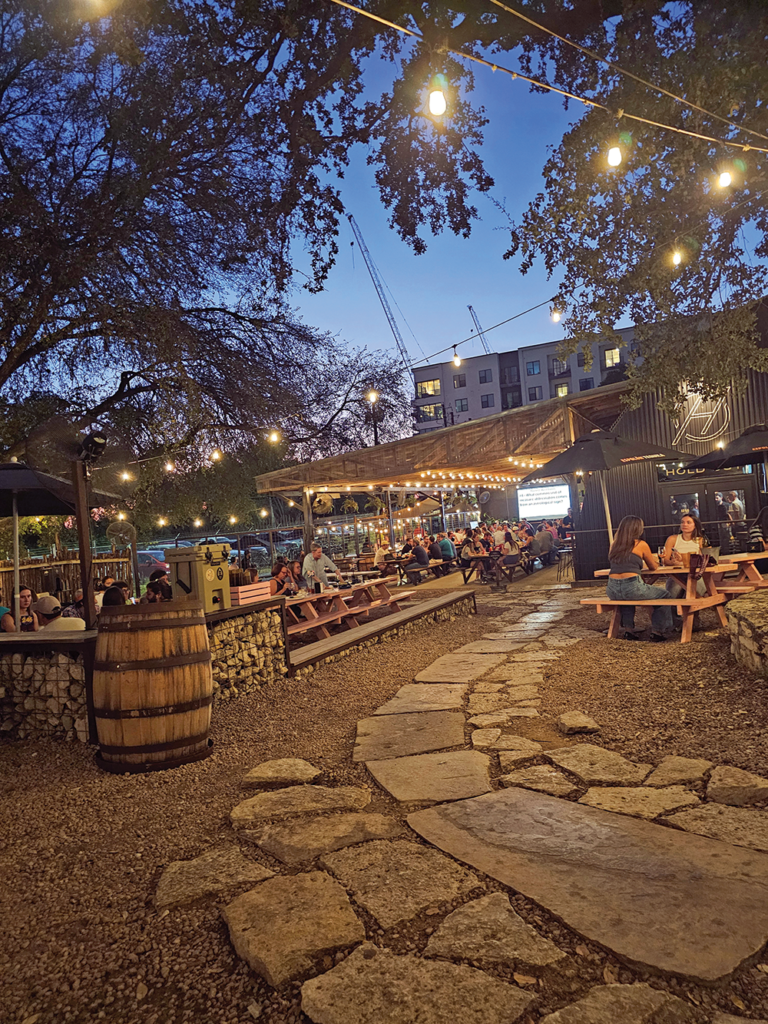
Sapstead says that having two venues with diverse menus and beverage options has helped them stand out in Austin’s crowded restaurant scene. Prioritizing in-house sales over shipping out kegs has also been key. Though Hold Out is one of Austin’s more popular breweries, the company employs a limited draft distribution model. Sapstead and his partners believe this has protected them from some of the more impactful swings in the craft-beer market.
For the first several years, Sapstead (who is also Hold Out’s head brewer) prided himself on producing a constantly rotating array of beers. Doing so kept patrons entertained and coming back for more, but last year he noticed regulars by and large looking for consistent core brands they could count on to always be on tap. This prompted a shift in priorities and methodology, with Sapstead selecting fan-favorite recipes to hone with each consecutive brew. The focus also helped Hold Out finish an industry-challenging 2025 at 1,162 barrels, roughly even to the previous year.
“Learning to be more deliberate about our production is the theme for this year,” says Sapstead, who offers a bit of advice to his contemporaries. “It’s important to always stay focused on your guests and be ready to evolve with their evolving tastes. At the end of the day, the work we do is for their benefit. If we want them to continue paying our bills, it is incumbent upon us to provide the experience they are willing to spend their money on.”
Sapstead says that having easy, first-hand access to customer preferences in his own building is another plus, as is the opportunity to engage with them, in general.
“[Brewpubs] create an opportunity for conversation and connection between the beermaker and the guest, which takes the otherwise transactional exchange of an off-premise beer purchase and turns it into a person-to-person interaction that I think many people long for,” says Sapstead. “If there is a long tail of the pandemic that is still playing out in the brewing industry, I think this is absolutely part of it.”
Striving for authenticity
When Erik Jones and his wife, Jenny Davies, launched Heliotrope Brewery in Lexington, Va., in 2019, they strove to make it a reflection of themselves within a manageably sized, self-contained unit. They do not distribute and feel that is a great advantage – their business’ profitability or survival is not subject to whether an account chooses to put their beer on tap or their shelves.
“A keg of beer four or five times more profitable when we tap it in our own establishment. We can’t sell a keg to a distributor for $1,000, but, depending on the beer, we’ll make close to that from it in our taproom,” says Jones.
Maximizing the amount of time customers spend inside their four walls is key to selling that beer – and more of it – across their bar. Having a full kitchen pumping out a menu of Mediterranean dishes, including pizzas served piping hot from a brick oven, does that for them. To bring in more people and extend their stays, Heliotrope also offers an array of beverages beyond beer (e.g., ciders, hard slushies, and non-alcoholic options), free Wi-Fi, and shelves filled with games customers can play at their leisure. Even with all that, Jones contends it would largely be for naught were their space not authentic. The brewery finished with 135 barrels in 2025, roughly even to the previous year.
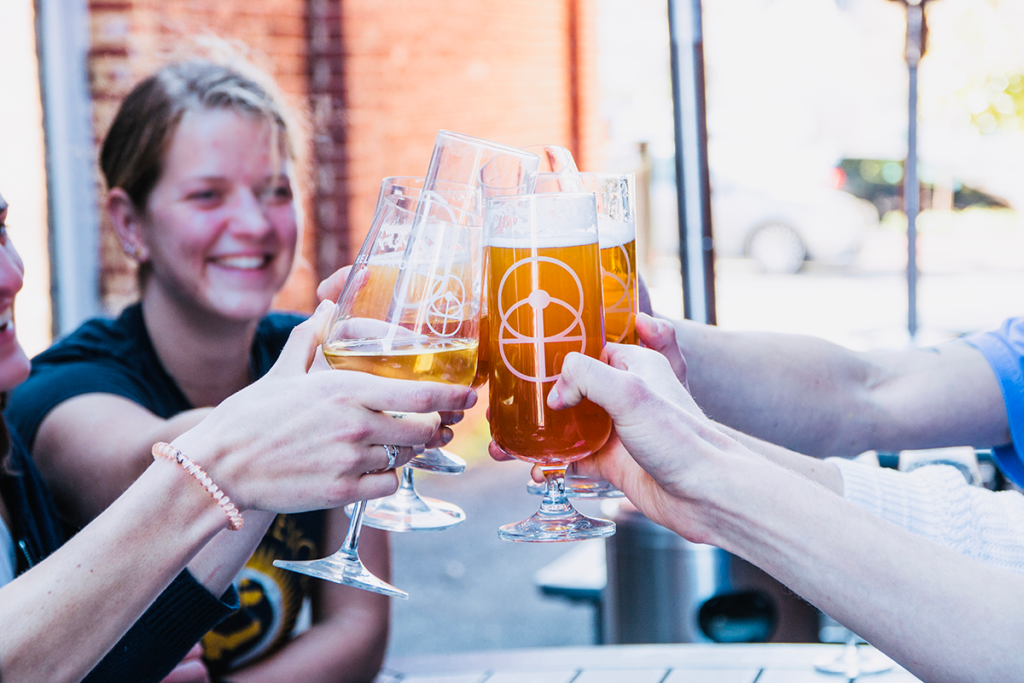
“When you visit a place that’s trying to be something that it’s not, it shows,” he says. “Let your place be a reflection of who you are and what you care about. Something that sets us apart is that our business reflects our own aesthetic and values.”
When it comes to food, beverage, and design, that means cooking with local, seasonal ingredients whenever possible, using Virginia craft malts and a wild-foraged yeast and bacteria culture hailing from their literal backyard, and decorating the walls of their brewpub with a rotating stock of imagery from local artists that is available for purchase.
In terms of their immediate community, authenticity translates to partnerships with local universities and homebrewers, as well as charity organizations and community groups. The couple regularly donates their space to the latter while earmarking a portion of proceeds to various nonprofits through their Sharing Sunday program.
“Because we are a ‘mom and pop’ shop, we are flexible and can meet the needs of community members and local organizations in a way that larger businesses can’t,” says Jones.
An eye on giving back
Jud and Amber Watkins share Jones’ and Davies’ charitable bent. In addition to homebrewing and hospitality chops, the couple have backgrounds in social work and nonprofit-management experience, all of which they put to work at their nine-year-old community-driven business, Wrightsville Beach Brewery in Wilmington, N.C.
“Our mission is to educate our customers about good environmental stewardship and contribute to the sustainability of local charities while also making tremendous beers,” says Jud. “Making beer and giving back to the community have equal standing with us; one does not trump the other.”
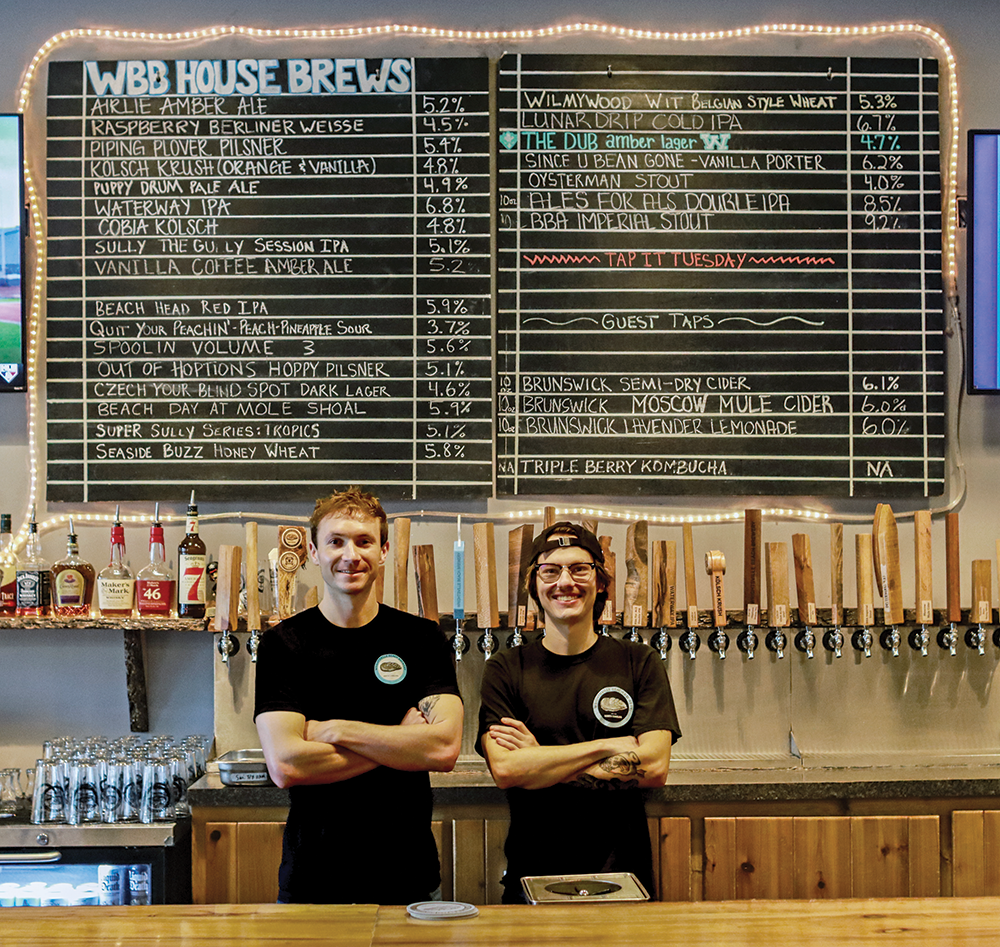
The couple believes their nonprofit programming and work in the community set them apart. Those efforts include partnering with 11 different not-for-profit organizations per year, providing each with a portion of proceeds from a corresponding Beer of the Month, as well as 1% of total beer proceeds in the month of December.
It seems a risky proposition to carry out a business plan with such an emphasis on giving away hard-earned revenue – especially in such a challenging economy and climate for craft-brewers – but it has forged strong bonds with the Watkins’ customers and neighbors, inspiring patronage and profits that allowed them to open a second location across town in 2022. The duo says adding that venue greatly increased in-house pint sales. Venturing beyond hops-driven and other ubiquitous styles has also helped in that area. They finished 2025 with 2,800 barrels, roughly on par with 2024.
“We embrace that not every customer wants a double IPA, so we have always offered a wide variety of beer styles,” says Jud. “Additionally, we offer wine and spirits, as well as ciders that we began producing when we opened our second location. Our production team has done an amazing job with creative ciders, even winning awards on a national level.”
The art of simplicity
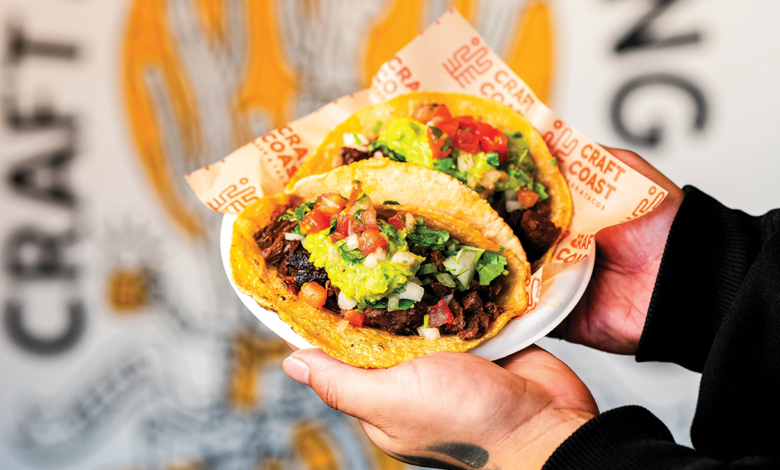
While the beer business can seem rather complicated – especially these days – Blake Masoner strove for simplicity when developing the idea for Craft Coast Beer & Tacos. While brewing for Pizza Port, an award-winning company operating brewpubs along Southern California’s coastline, he was inspired by the straightforward nature of their family-friendly pints-and-pies model, elements of which can be seen in his own business. Craft Coast, which replaces pizza with San Diego-style taco-shop fare, has been a runaway success since opening in 2020.
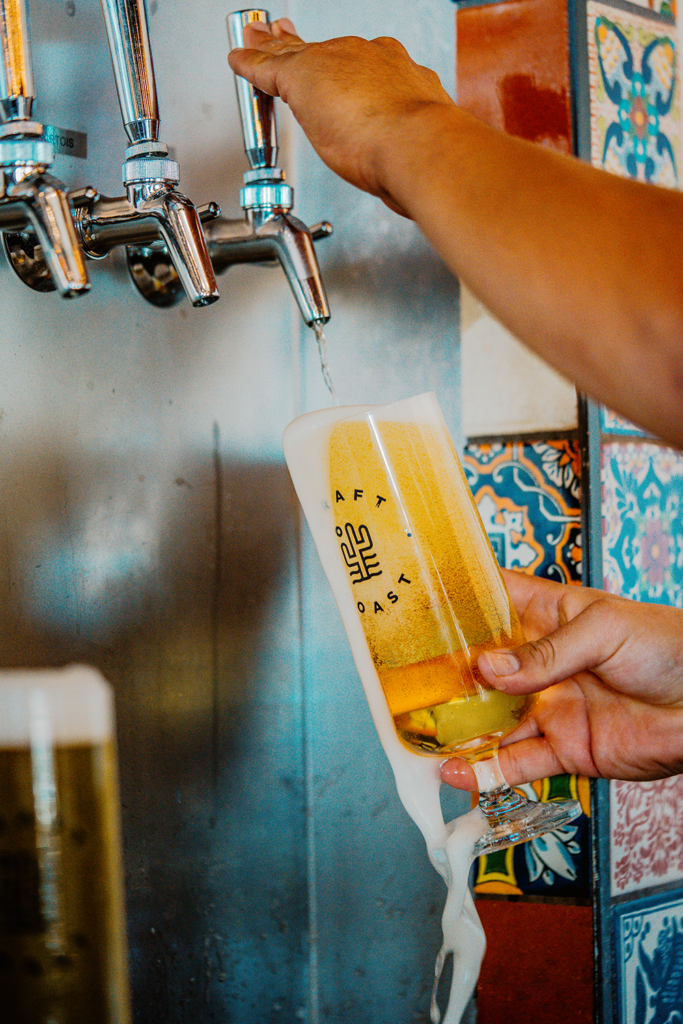
“We went into the industry looking to stand out by offering something new and different that wasn’t available at the time,” says Masoner. “The goal was to merge two iconic Southern California staples, craft beer and tacos, in a simple yet effective way. We picked great locations that were manageable in size and designed to fill out quickly. We believe it’s OK to be busy and have lines. It’s what makes people look in and say, ‘We should check that place out sometime.’”
For that scenario to play out, there must be foot traffic, so location was also a prime factor for Masoner and his team during site selection. Craft Coast’s first location is at the base of a luxury condo building, two blocks from the beach along the main drag of a section of downtown Oceanside that has been redeveloped into a hotbed for hospitality and tourist lodging over the past decade. Having a daily onslaught of passersby has been integral to its success.
In 2024, Craft Coast purchased a production facility in the nearby city of San Marcos, allowing it to significantly increase its annual barrelage, add canned beer to its repertoire, and open a second public venue offering the same compact menu as its progenitor. That bill of fare includes a short list of tacos, mulitas, and nachos. It’s a quality over quantity approach that works exceptionally well.
“Our goal is to avoid overextending ourselves and chasing trends,” says Masoner. “We don’t have to offer everything, but what we do offer has to be great all the time.”
That ethos carries over to Craft Coast’s roster of beers, which is made up mostly of West Coast IPAs and pale ales, hazies, and low-alcohol lagers, several of which have medaled at the Great American Beer Festival and World Beer Cup. Those hop-heavy and crushable house brews can be ordered at the same time as food, something Masoner counts as one of the biggest advantages brewpubs have over traditional breweries that partner with mobile food vendors.
“No offense to [establishments that use] food trucks, but not everyone wants to make two separate purchases, one for drinks and one for food,” he says. “We allow the customer to decide what they want to drink at the same time, capitalizing on consumer impulse.”
At press time, Craft Coast was readying to open a third location in the seaside municipality of Encinitas. In the coming years, Masoner and his team plan to open several more locations in coastal neighborhoods throughout San Diego County.
“I truly believe the most successful model for craft beer moving forward is the brewpub model; community-driven establishments where everything is fresh, and the vibes are high.”
This article originally appeared in the May/June 2026 edition of The New Brewer Magazine, a publication of industry trade organization, the Brewers Association